
Apollo is probably the default prospect database for most outbound teams. The data is cheap, the UI is fast, and the contact volume is hard to beat at the price point.
But once you start building outbound prospecting infrastructure on top of it such as agents and automated enrichment pipelines, you start hitting limitations that aren't so obvious.
Here are three I've run into that’s worth sharing, with the workarounds I ended up building.
#1: Apollo's prospect keyword search is extremely shallow
If you want to find prospects whose work involves “webinars,” Apollo will only return people with the literal word “webinar” in their job title.
That’s a tiny fraction of the people who actually run webinars. Most of them have titles like “Demand Gen Manager,” “Content Marketing Lead,” or “Field Marketing Director” and the webinar work shows up in their headline, About section, or job experience, not the title.
Compare this to vendors that have indexed the full LinkedIn profile such as Crustdata, MixRank, AI-Ark where you can keyword-search across:
Job title
Headline
About section
Job experience descriptions
Education
Skills
Skills searches are super underrated. If your ICP is defined by software proficiency or certifications such as L&D buyers running Docebo, Articulate, or Absorb LMS - Apollo can't find them.
You have to fall back to firmographics + title and accept that most of your list will be off-ICP.
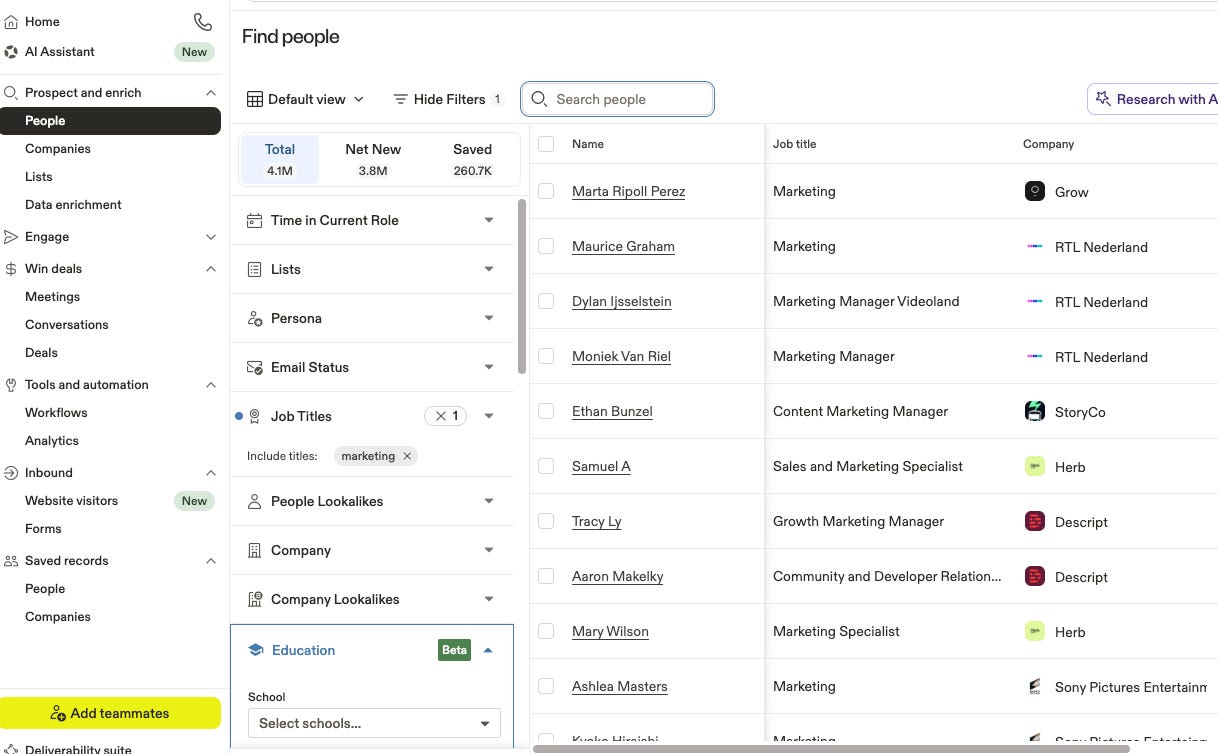
#2: Apollo's API/MCP doesn't expose all the filters its own UI has
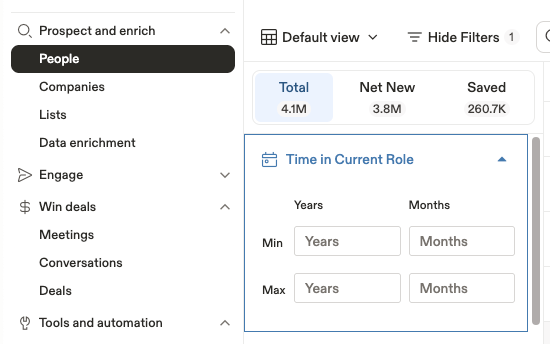
Example: I want to find marketing leaders who changed jobs in the last 90 days.
In the Apollo UI, “changed job in last X months” is a one-click filter.
In the API and MCP, it’s not exposed at all (this is really strange and frustrating).
The workaround is not ideal at all. You have to
Pull all marketing leaders matching your firmographics
Enrich each person individually
Read each person’s employment_history arrary
Calculate the start date of their current role
Filter to the ones who started in the last 90 days
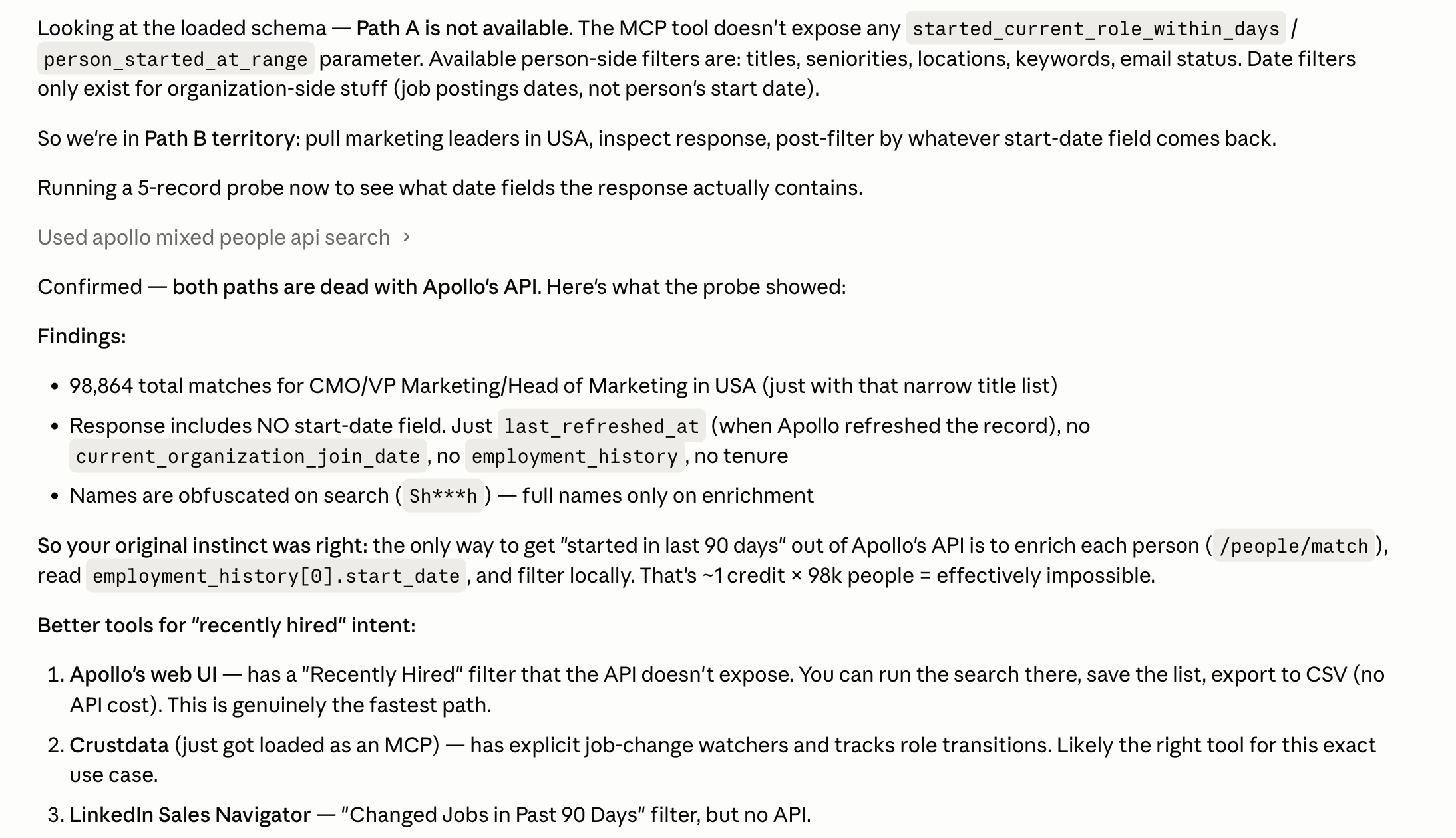
Not only is it slow, it’s a real waste of LLM tokens and Apollo credits.
#3: Apollo’s “verified” emails have a 7.5% real-world failure rate
Apollo returns two types of email for your prospects:
Verified: Apollo claims they’ve confirmed deliverability via SMTP
Extrapolated: Apollo guessed it from a pattern (first.last@domain.com)
When you’re calling Apollo through the API or MCP, this distinction isn’t surfaced clearly. Both come back flagged as “sendable.” So if you’re piping Apollo’s output straight into your sequencer, you’re treating guesses and verified emails the same way.
The bigger problem is that even the “verified” emails fail at a meaningful rate.
I ran a re-verification pass on one of my recent batches using MillionVerifier (standard SMTP) followed by BlitzAPI (catchall domain handling), on emails Apollo had already flagged as sendable. Here’s what came back:
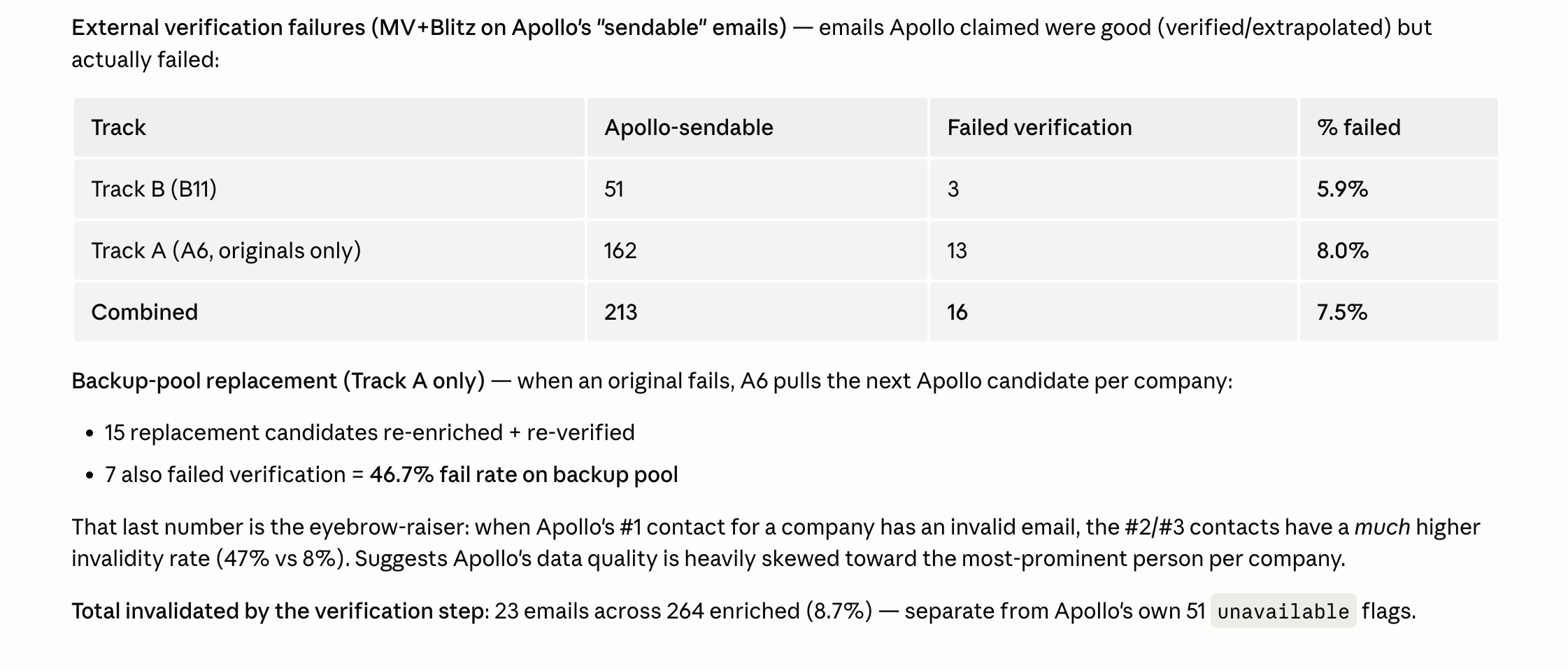
7.5% of “sendable” emails failed external verification. If you send these straight into a campaign, that is going to be your bounce rate floor, which is not acceptable at all.
Practical takeaway: if you're running cold outbound at any volume, don't trust Apollo's "sendable" flag as your final filter. Add a second verification layer (MillionVerifier or equivalent) and a catchall handler (BlitzAPI or similar). It's not optional as that’s going to be the difference between a 7.5% bounce rate and something deliverability-safe.
Closing thoughts
Honestly, my answer is to stack a second data vendor on top. Crustdata/AI-Ark/Mixrank for keyword depth and job-change detection. MillionVerifier + BlitzAPI for email validation.
What surprises me is that Apollo hasn't closed these gaps yet. I'm hoping they catch up. Apollo at this price point with full-profile keyword search, complete API filter parity, and trustworthy email verification would be a hard product to beat.
Until then, the answer is to stack a secondary data vendor.