
The outbound motion usually comprises of 4 steps:
Find prospects
Find their email
Verify the email
Send email
The email verification step is important to protect your domain reputation and deliverability. When you send to a invalid inbox, your email bounces. Too many bounces and the mailbox providers start treating you like spam and your emails start landing in the spam folder.
Generally you want to keep bounces under 2% on your prospect list, because once you cross this number your sender (+ domain) reputation starts taking damage and this could affect email deliverability.
That's why verification isn't really a nice-to-have. It's the step that keeps your bounce rate low enough for you to keep sending at scale.
How normal email verification works?
When you run a list through a service like MillionVerifier or ZeroBounce, a few checks happen in the background.
There’s a syntax check to confirm the address is a valid email format, and an MX record check to confirm the domain can actually receive mail. But from my understanding, the main part of the verification comes from the SMTP check.
This is where the verifier opens a connection to the mail server and asks it to confirm whether that specific mailbox exists. The server responds, and based on that response you get a verdict of valid, invalid, or something in between.
For most emails this works fine. The server gives a straight answer and you know the email is good to send.
But this doesn’t work on catch-alls…
A catch-all domain is a mail server set up to accept every address sent to it. So john@company.com gets a yes (verified), but asdf@company.com gets a yes too (verified), because the server accepts everything regardless of whether the mailbox is real.
This is the problem. When the verifier runs its SMTP check against a catch-all domain, the server says yes no matter what. So the verifier can’t tell a working inbox from a dead one, and all it can return is a verdict like catch_all or unknown, which is just its way of saying it couldn’t confirm the address.
The catch is that “accepts the email” is not the same as “the email successfully delivers.” A catch-all address can come back looking valid, but still bounce when you actually send to it, because:
the person has left the company and the mailbox is gone
it was never a real mailbox in the first place
the server accepts it at the door, then bounces it later
So a catch-all gives you a false yes. It looks verified, but you only find out it’s invalid after it bounces and the damage to your deliverability is already done.
And here’s what most people do when they see a catch_all verdict. They drop it. The verifier couldn’t confirm it, so the contact gets thrown out.
That’s the biggest leak in my opinion. A lot of those are real prospects with real, working inboxes, removed simply because the standard verifier was blind to them.
Why there’s a market opportunity in catch-alls?
There are two reasons catch-alls are worth chasing instead of dropping.
#1: The first is that very few people bother to verify them.
Most operators don’t bother verifying catch-alls. They either drop them outright, or send to them blind and damage their own deliverability. So almost nobody is actually confirming which catch-all addresses are real, which means the prospects you recover here are the ones everyone else has already given up on.
#2: The second is that these inboxes tend to be less crowded.
The inboxes are less crowded too. Every outbound team is fighting over the same easy-to-verify contacts, so those inboxes are filled with cold emails every morning.
The catch-all contacts are not. Because so few people reach them properly, you’re not fighting nearly as hard for their attention.
The two catch-all providers I’m using
For this layer I use two providers.
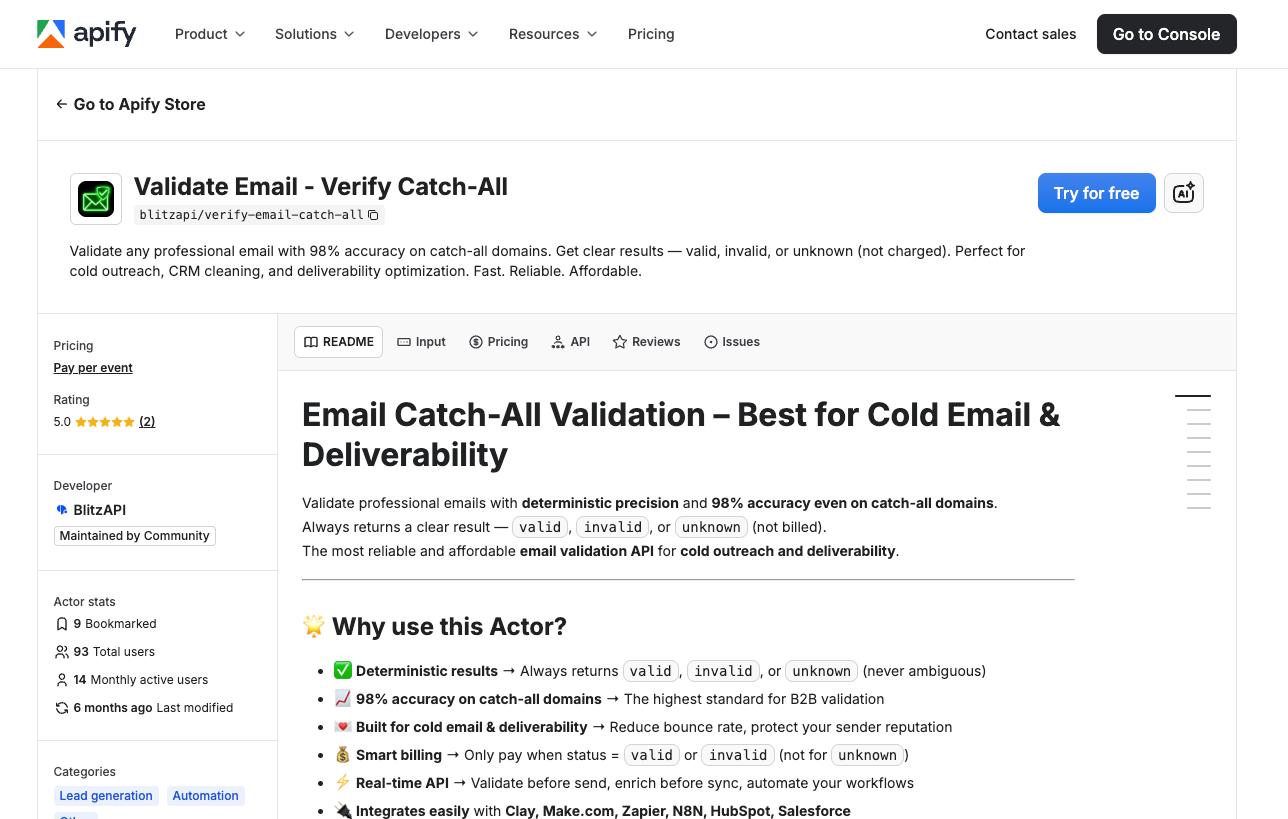
The first is BlitzAPI, the catch-all verifier on Apify. It returns a clean valid, invalid, or unknown, and claims 98% accuracy on catch-all domains. The billing is very reasonable too, because you only pay for the valid and invalid results while unknown comes back free. So you’re never paying for the cases it can’t actually resolve.
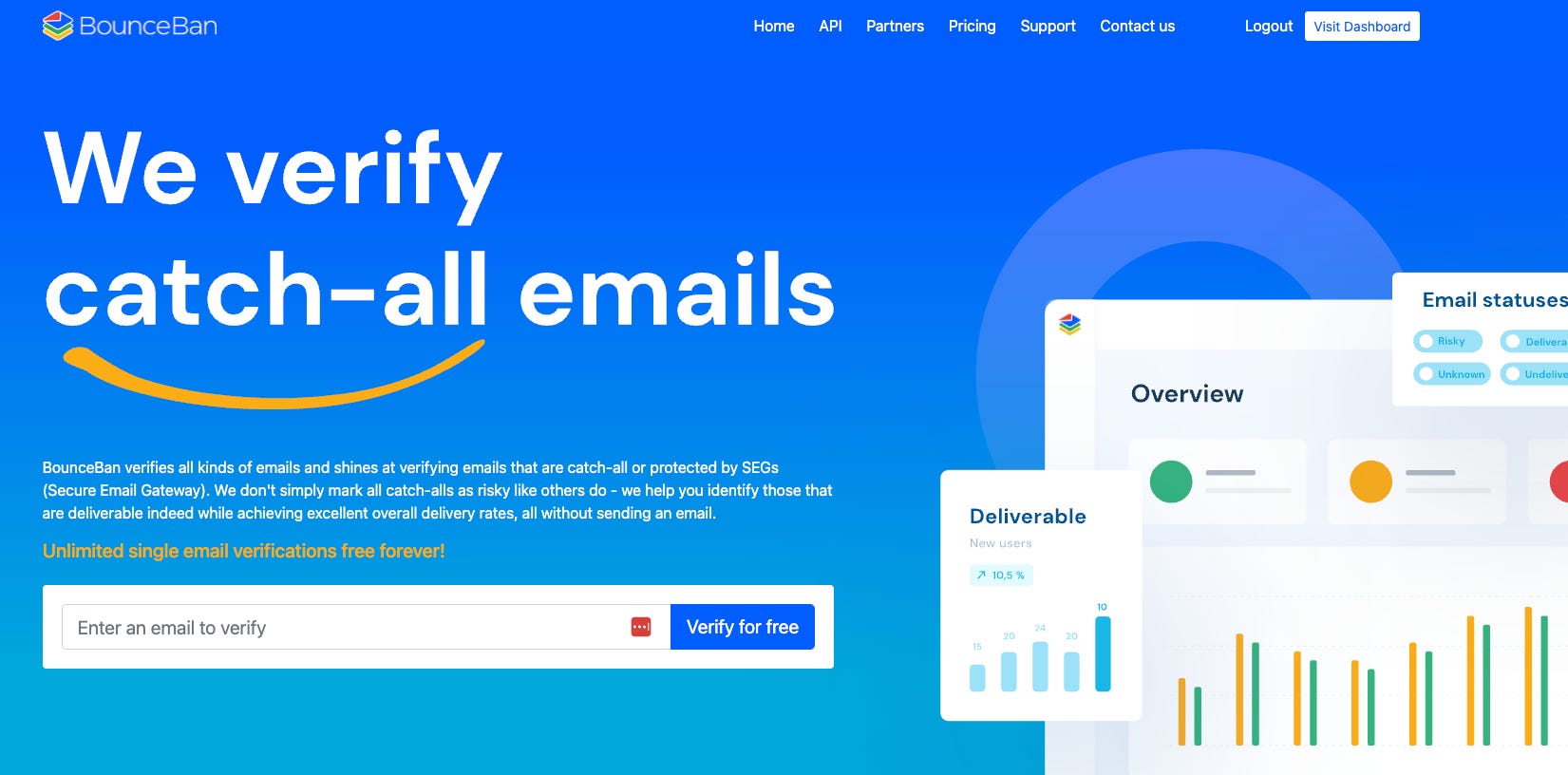
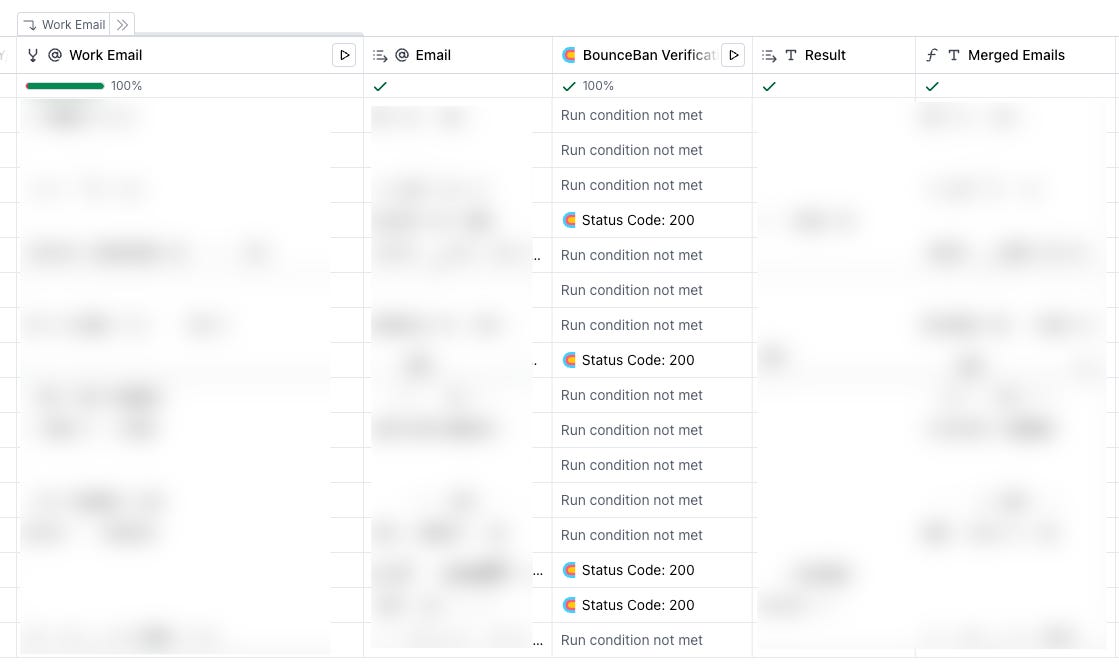
The second is BounceBan, which I use as the backup. The Blitz actor on Apify is a community tool, so it does occasionally not work (I have no idea why). So my pipeline runs a small canary check on every batch, and if Blitz comes back with garbage, the whole batch gets rerouted through BounceBan's deeper verification instead.
From my understanding, after speaking to a few catch-all vendors, the way these catch-all tools work is that they check an email against signals of whether that inbox is actually active elsewhere on the web, like whether it’s been used to sign up for other apps or services, rather than relying on the SMTP ping alone. I could be wrong on the exact mechanics though, since this isn’t something the vendors document very openly.
Double Verification (Normal + Catch-alls) = 18% lift in Usable Outreach List
These figures come from my own verification runs in May 2026.
5991 emails found
3956 verified by MillionVerifier
1425 labelled as catch-all or unknown (normally these get dropped)
697 of those recovered as valid by Blitz API + BounceBan (nearly 49% recovery)
728 catch-all addresses caught as bad and removed
So my usable list went from 3,956 up to 4,653. That’s an 18% lift, meaning roughly 1 in 6 of my sendable prospects only existed because of the catch-all layer.
And this work both ways. On top of the 697 I recovered, the same catch-all verification removed 728 bad addresses that would otherwise affected my campaign bounce rate.
Final Thoughts
Always double verify.
The standard verifiers do a very good and cost-effective job on the main bulk of your prospect emails. But the moment they hit a catch-all domain, that’s where you should bring in a catch-all verifier to try and recover those prospects.
You recover the real inboxes everyone else gives up on, and you catch the invalids ones that would have bounced and hurt your deliverability.